💡 Agency/client kickoff meeting defined
The agency, or client, kickoff meeting is the first formal working session between an agency and a client at the start of a new engagement. It aligns both sides on goals, scope, timeline, roles, and how the work will happen. Done well, it prevents most of the scope creep, missed deadlines, and crossed wires that derail agency projects.
Why most agency kickoffs fall flat
Three patterns show up again and again in client kick off calls, no matter how senior the team is.
The kickoff is too friendly to be useful - Everyone's excited, the client likes you, you all promise to make great work. Nobody asks the awkward questions about budget, decision rights, or what success actually looks like.
The agenda is too generic to surface real risk - A standard "introductions, scope, timeline, next steps" template covers the headings, but skips the conversation that flags whether the budget can support the timeline, or whether your client has actually got sign-off from their CMO.
The follow-up takes a week - By the time the project manager has written up the recap and circulated the brief, two more meetings have happened, the team is half-mobilized, and the document everyone needed for clarity arrives after the moment it would have helped.
"The biggest opportunity is using AI to get back the hours we lose to tedious operations and set up, such as proposals and onboarding, and putting that time into our people."
— Heather Hamilton, Founder, Well Optimized SEO
According to the State of Meetings 2026, 46% of meetings now include someone outside your company. Kickoffs are the highest-stakes version of that: The conversation that defines the next three, six, or twelve months of client work. They deserve a much sharper approach than they usually get.
Before the meeting: The prep checklist
The kickoff goes well or badly based on what you do in the 48 hours before it. Use this checklist.
Send a short pre-meeting questionnaire to the client
Three to five questions should it, things like goals, constraints, who needs to be added to the call. The answers help shape the agenda.
Write a one-page internal brief for your team
Client background, contract scope, known risks, the questions you want answered in the kickoff. Anyone joining the call should be able to read this and add to it.
Pre-read the contract and the SOW
Especially the deliverables list, the timeline, and the change-order clause. This will make sure you're more informed and ready to respond when the inevitable scope creep request comes.
Confirm the right people are on the invite
If the client's product lead, legal contact, or budget holder needs to be there, make sure you know that.
Build a kickoff deck to walk the client through
Use our project kickoff presentation template to generate a nine-slide deck from your planning context. Covers objectives, scope, timeline, roles, and success criteria. Have it ready to share during the call.
If you want a structured walk-through of meeting prep, see our full guide to meeting prep.
The agency kickoff meeting agenda
Use this as a starting template. Time-box each section so the conversation moves. For a typical 60-minute kickoff, allocate the time roughly as suggested below. For a 90-minute kickoff, scale up the strategy sections.
1. Introductions and roles (5 min)
Who is on the call, what they do on this project, and how they prefer to be reached. Skip the LinkedIn bios. Get to the working relationships.
2. Project purpose and success metrics (10 min)
What's this project actually trying to do for the client's business? What does success look like at the end of it? Push for specific, measurable answers. "Increase brand awareness" isn't a success metric. "Hit 5,000 qualified signups by end of Q3" is.
3. Scope, deliverables, and out-of-scope (15 min)
Walk through what's in the statement of work. Crucially, name what's out of scope. Most scope creep starts with an unsaid assumption. This is the conversation worth lingering on.
4. Timeline, milestones, and approvals (10 min)
Key dates, review gates, and the non-negotiable launch window. Flag dependencies the client owns: Asset delivery, sign-off windows, legal review. Lock down who signs off on what, and how fast. If the client's CFO has approval rights and isn't on this call, you need to know now.
5. Risks and assumptions (10 min)
Ask the client what could go wrong. Share what concerns you. This is the section every kickoff skips and every project regrets skipping.
6. Communication cadence and next steps (10 min)
Reporting, Slack or email, where files live, who owns the shared workspace. Close with three to five action items, each with a name and a date.
During the meeting: What to take notes on
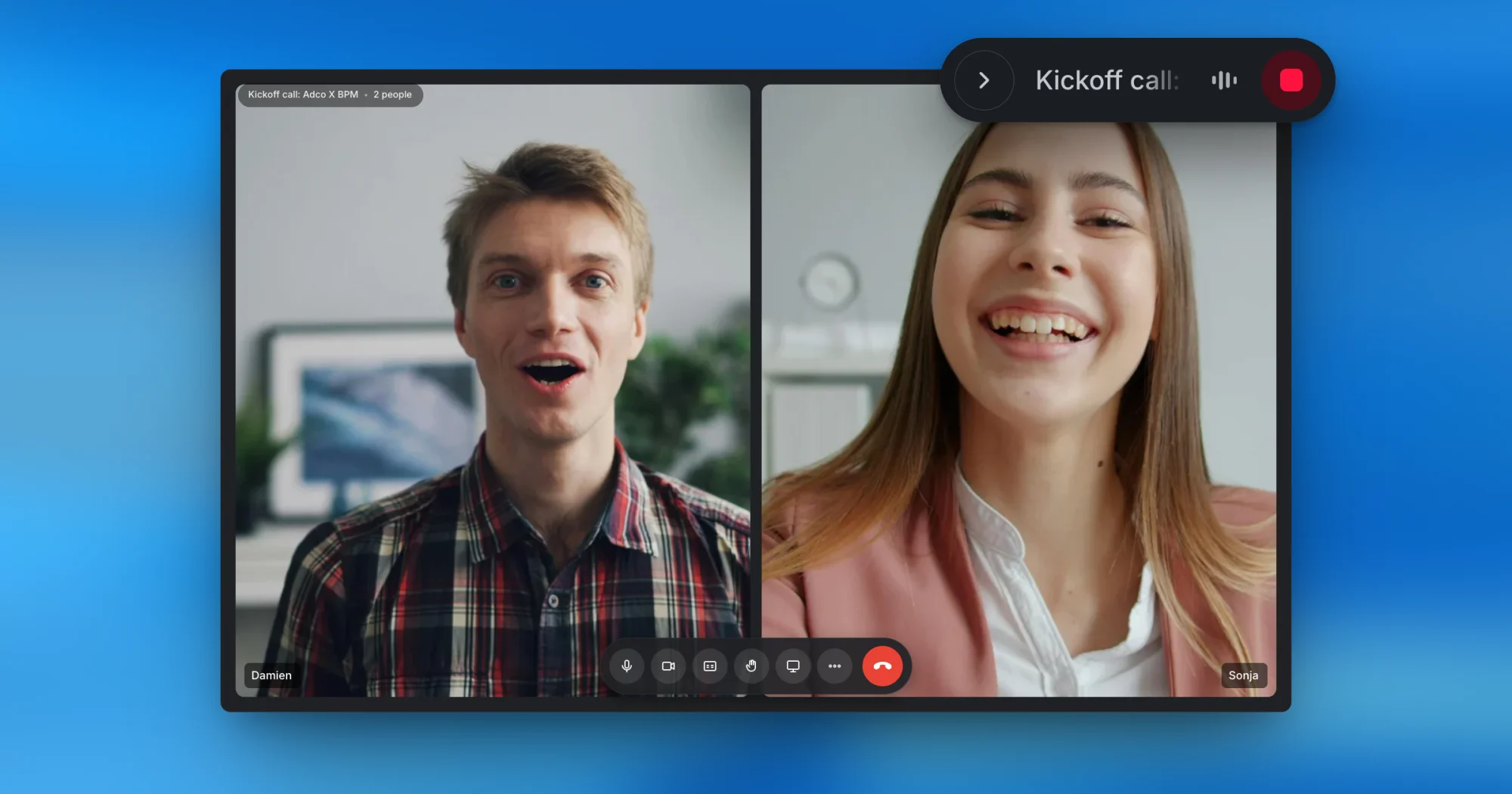
A kickoff produces lots of information in a short window. Decisions, owners, dates, risks, scope boundaries, success metrics, stakeholder names. Trying to take it all down by hand means you stop listening. Asking a bot to join the call means your first impression with the client is a Zoom participant called "Otter".
This is where Supernormal earns its keep. Supernormal transcribes your meetings without a bot on the call, takes the notes for you, and makes the full context available the moment the call ends. You stay present in the conversation. The client only sees you, no notetaker bot.
What to actively listen for during the kickoff:
Specific success metrics, in the client's own words
Anything that contradicts the SOW
Decision-makers you didn't know existed
Risks the client raises, even casually
Anything the client says twice (it matters to them)
Supernormal preserves all of it as part of the project's shared context, so the whole team can refer back to it later.
After the meeting: Hit the ground running
Here's where most kickoffs lose their value. The conversation was great, the client felt heard, the team felt aligned. Good times. Then someone has to spend a few hours writing it all up and assigning actions. Bad times.
You may be wary of letting AI near client-facing work. It's a fair instinct. The worst thing an agency can do is send something that doesn't sound like you, or worse, gets a fact wrong.
With Supernormal, you're always in the driver's seat and nothing gets sent without your approval. The kickoff conversation can become the context for four separate outputs. Ask Supernormal for any of them, and each one's ready to review in moments.
The client brief
A formal brief in your agency's voice, covering goals, scope, deliverables, timeline, and approval flow. Start from our campaign brief template and shape it to fit your house style. Ready to send to the client for written sign-off, which means the agreed scope is documented and dated before anyone has time to misremember it.
The recap email
A short, client-friendly summary of what was agreed, with action items and owners pulled directly from the conversation. The kind of email that takes you forty minutes to write by hand, ready to polish and send in moments.
Slides for the wider agency team
Ask Supernormal to turn the kickoff into a short set of Slides for the rest of the team: Account, creative, strategy, production, finance. The people who weren't on the call get fully up to speed without sitting through a recording. Drop the deck into Slack, present it at the next internal stand-up, or send it ahead of the first creative session. The wider team is on the same page before the day's out.
The project plan
A draft project plan with milestones, owners, and dependencies. A starting point for your project manager, not a finished plan, but a draft that takes minutes to refine rather than hours to build from scratch.
All four outputs come from the same conversation context, so they tell the same story. It means no more situations where the recap email and the project plan say slightly different things because two different people wrote them.
Common kickoff mistakes (and how to avoid them)
Treating the kickoff as a relationship meeting, not a working session - Build rapport in the first five minutes. Spend the next fifty doing the actual work of aligning.
Skipping the out-of-scope conversation - If the client thinks you're delivering something you aren't, you'll find out at the worst possible moment. Say what's out of scope, in writing, in the kickoff.
Not naming the decision-makers - A project with unclear approval rights moves at the pace of the slowest stakeholder. Map approvals in the kickoff and confirm them in the brief.
Writing the recap a week later - The longer the gap between meeting and recap, the more both sides start filling in the blanks with their own assumptions. Get the recap out the same day. Supernormal makes that realistic.
No follow-up cadence agreed - If the kickoff ends without a clear "we meet every Tuesday at 10", you've left the most important variable of the engagement to chance.
Get the kickoff right, then get the work done
The agency kickoff meeting is the highest-leverage hour of any new engagement. It sets the scope, the trust, and the working rhythm of the next several months. Run it with a clear agenda, prep your team in advance, and let Supernormal handle the write-up so you can focus on the conversation, the client, and the work.
Supernormal is built for agencies: Client briefs, decks, project plans, and recap emails, all from the same conversation context. Try Supernormal for free, and ask for the brief at the end of your next kickoff. It's ready by the time you've packed up.